
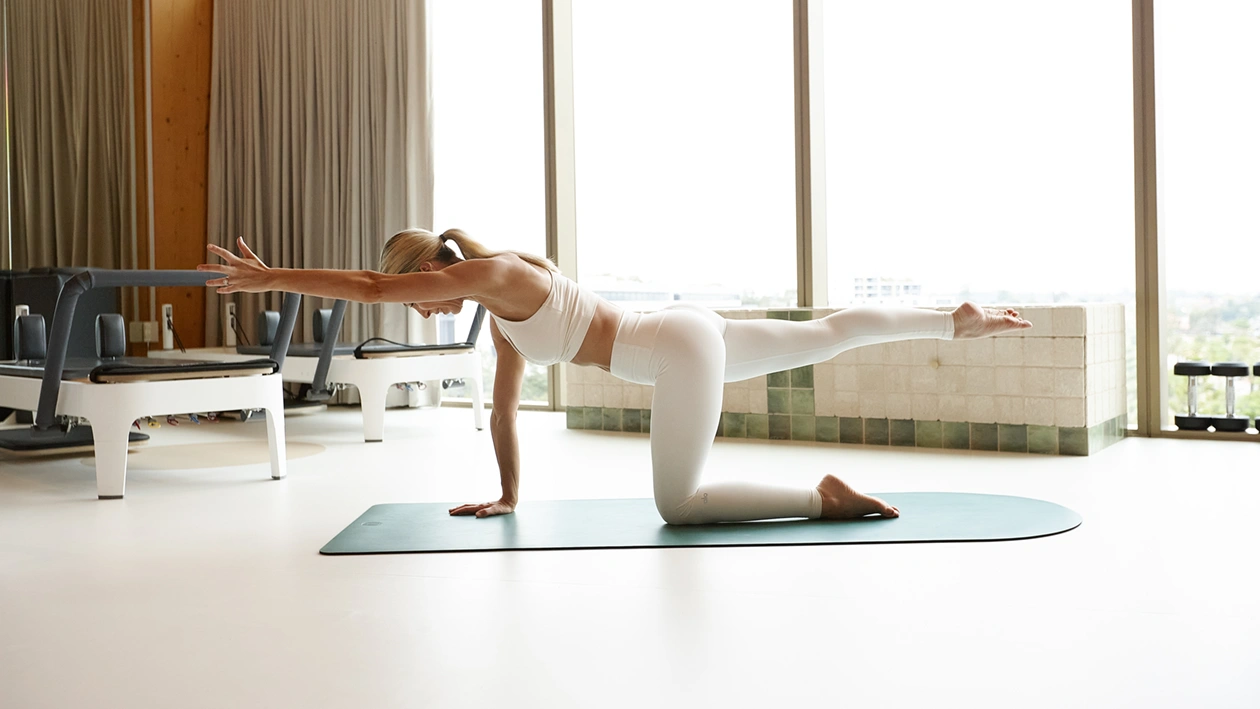
Walking into your first Pilates class can feel like turning up to a party where everyone knows each other except you. The good news? Getting your “go-bag” sorted takes about five minutes and it’ll save you the awkwardness of realising mid-reformer that your loose singlet keeps flopping over your face.
Here’s everything you need to know about what to bring, what to wear, and what to leave at home.
The Pilates Go-Bag Essentials
For most studios, you don’t need much. Bring a water bottle, a small towel, and grip socks. Wear form-fitting clothes that allow instructors to see your alignment, avoid zippers or loose fabric that can get caught in equipment. You’ll likely be barefoot or in socks, never shoes.
Grip socks deserve special mention. These aren’t just a studio quirk, they’re genuinely useful. The rubber grips on the sole stop you sliding around on the reformer carriage (which moves), and they’re far more hygienic than going barefoot on equipment dozens of people use daily. Most Australian studios sell them at reception if you forget, but expect to pay a premium.
A form-fitting top matters more than you’d think. During roll-downs, inversions, and overhead work, anything loose will end up around your ears. You don’t need expensive activewear—just something that stays put when you’re upside down.
A hair tie is essential if your hair is longer than chin-length. You’ll spend significant time lying flat on a headrest, and hair underneath your head throws off your neck alignment. Chuck one on your wrist before you leave home.
Your water bottle should be something you can open one-handed. You’ll want small sips between exercises, and fumbling with a screw-top lid while your core is still shaking isn’t ideal.
What to Leave at Home
Some things actively work against you in a Pilates studio.
Clothing with back zippers can damage the leather or vinyl covering on reformer carriages and mats. That cute workout crop with the decorative zip down the spine? Save it for yoga.
Loose running shorts create an exposure risk during leg circles, frog position, and anything involving the straps. Form-fitting bike shorts or leggings are your safest bet.
Heavy jewellery is a genuine safety hazard. Long necklaces can catch on springs, rings can pinch during strap work, and dangling earrings become a liability during any side-lying exercise. Keep it minimal.
Quick Answers to Common Questions
Do I go barefoot? Yes, or wear grip socks. Shoes never come onto the studio floor.
Do I need to wear a bra? A low-impact sports bra is recommended for both support and coverage. Regular bras with underwire can dig in during prone (face-down) exercises.
Do I need to bring a mat? Only for mat Pilates classes. Reformer classes provide all equipment—the reformer, straps, springs, and any props you’ll use.
What about a towel? A small hand towel is useful for wiping down equipment after use (standard studio etiquette) and dabbing sweat during class. You won’t need a full-size gym towel.
The Five-Minute Outfit Check
Before you head out the door, run through this quick test: Can you do a forward fold without adjusting your shirt? Are your socks clean and hole-free? Is your hair tie on your wrist? If yes to all three, you’re sorted.
Most studios have change rooms if you’re coming from work, and many provide lockers for your bag and valuables. If you’re unsure about anything specific—like whether the studio supplies grip socks for purchase or requires you to bring your own, a quick call or check of their website will clear it up.
The truth is, Pilates has a low barrier to entry equipment-wise. Once you’ve done your first class, you’ll realise it’s far less intimidating than it looks, and your go-bag will become second nature.
